Back to Browse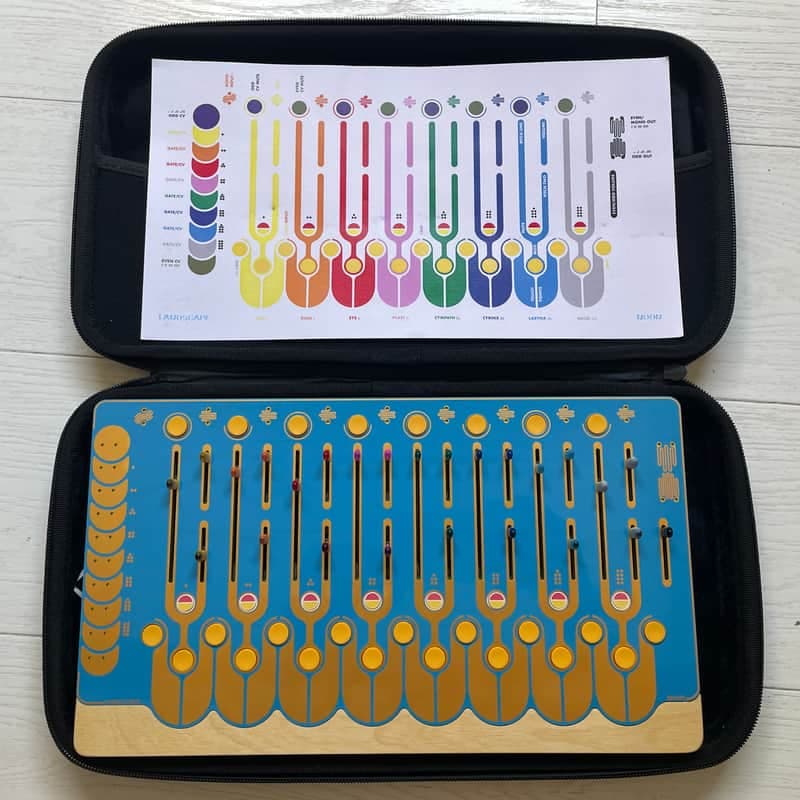
Landscape Noon 8-Voce Analog Drum Synthesizer 2023 - Present - Blue
£457
Price dropped from £482
ExcellentReverb14d ago
Sold by
T
Tiny Telephone Recording
Details
- First Seen
- 26 October 2026
- Last Seen
- 4 November 2026
- Times Seen
- 2
About this listing
Landscape Noon 8-Voce Analog Drum Synthesizer 2023 - Present - Blue is a used item in excellent condition, listed on Reverb. The asking price is £457. It is offered by Tiny Telephone Recording through Reverb. It is in our Synthesizers category. Used Gear Hunter first saw this listing on 26 October 2026 and last saw it on 4 November 2026. It has been seen 2 times in our scans. Prices are converted from the seller's currency when we scan the listing, so the amount you pay may differ slightly. The seller sets shipping, and import duty or VAT may apply, so check the final cost and the item's details on Reverb before buying.
From the seller
Unused and in perfect condition. Comes with very useful and collectible Gate/CV map. Purchased directly from Noon and never used. Comes with sturdy case from Analog Cases.
Thank you!!
John Vanderslice
Tiny Telephone
----
NOON is a passive analog drum/synthesizer. Each of the eight channels uses a unique analog circuit with its own characteristics. No power supply is needed. Each circuit is triggered and powered individually from incoming gates or control voltages provided by voltage sequencers or modular systems. By using this unique method, we can increase instability and magnify organic aspects of traditional analog electronic instruments. The sound of analog, at its core, is the sound of sculpted electricity. By removing the stabilizing elements of a constant power source, we can listen to the sound of electronic circuits loading and unloading, powering up and powering down, and we can increase the natural chaotic movement of electricity. The loading of circuits creates natural ways to access swing and groove or ways to deconstruct a programmed rhythm sequence to make surprisingly new ideas.
Each channel is represented by a tuning fork. Incoming voltage can be thought of as a way to “strike” each fork with momentary voltage. Between every channel there are Link buttons which allow voltage sharing between channels. Linking them provides a wide mix of results depending on incoming voltage, active or inactive channels, slider settings, gate lengths and multichannel linking. The results can be described as cross modulation, growth (creating a larger and more complex circuit), or processing (filtering, distortion). Due to the cycles of voltage and this inherent instability, a definition of what is actually occurring between channels can be hard to pin down. The eight Mod buttons, which are located at the bottom of each tuning fork, change the behavior and sound of each circuit. The eight latching CV buttons along the top allow the Even and Odd CV modulation inputs to route to even and odd channels. When incoming CV is unmuted, a channel’s behavior can change drastically and this behavior can change further when channels are linked. These CV inputs are a way to add microtonal pitch changes and/or large textural movement to voices. The Even and Odd CV inputs are summed to their respective channels to provide a rhythmic modulation reference between multiple channels.